The Confluence Historic Site & Parkland Site Concept Plan
Client The Confluence Historic Site and Parkland
Location Calgary | Alberta | Canada
Site Concept Plan: https://www.theconfluence.ca/siteconcept
The Confluence Historic Site and Parkland represents one of Calgary’s most significant cultural landscapes—where the Bow and Elbow Rivers meet and Indigenous peoples have gathered for millennia. Grounded in truth-telling, this 20-year master plan underpins the future transformation of the site into a premier destination for reconciliation, storytelling, and community gathering.
Working with the team at The Confluence, The Hatlie Group and Reimagine Gathering, our team has facilitated meaningful dialogues with over 500 participants from February to December 2025, including Treaty 7 Nations, the Métis Nation of Alberta, urban Indigenous organizations, and diverse community groups spanning education, parks, hospitality, events, heritage, culture, museums, and community-serving organizations. Guided by an approach that respects both Indigenous and Western worldviews, the Site Concept Plan treats land and culture as inseparable. The design embraces the full, layered history of the land, from geological processes and over 12,000 years of human habitation to the arrival of the railway, the establishment of Fort Calgary, and the growth of the modern city.
The entire process centered around relationship-building, navigating multiple perspectives without oversimplifying the site’s rich complexity. Through a series of collaborative workshops and touchpoints, the team gathered insights and memories that directly shaped the design lines, ensuring the final spatial configuration genuinely reflects the diverse voices and collective aspirations engaged along the journey.
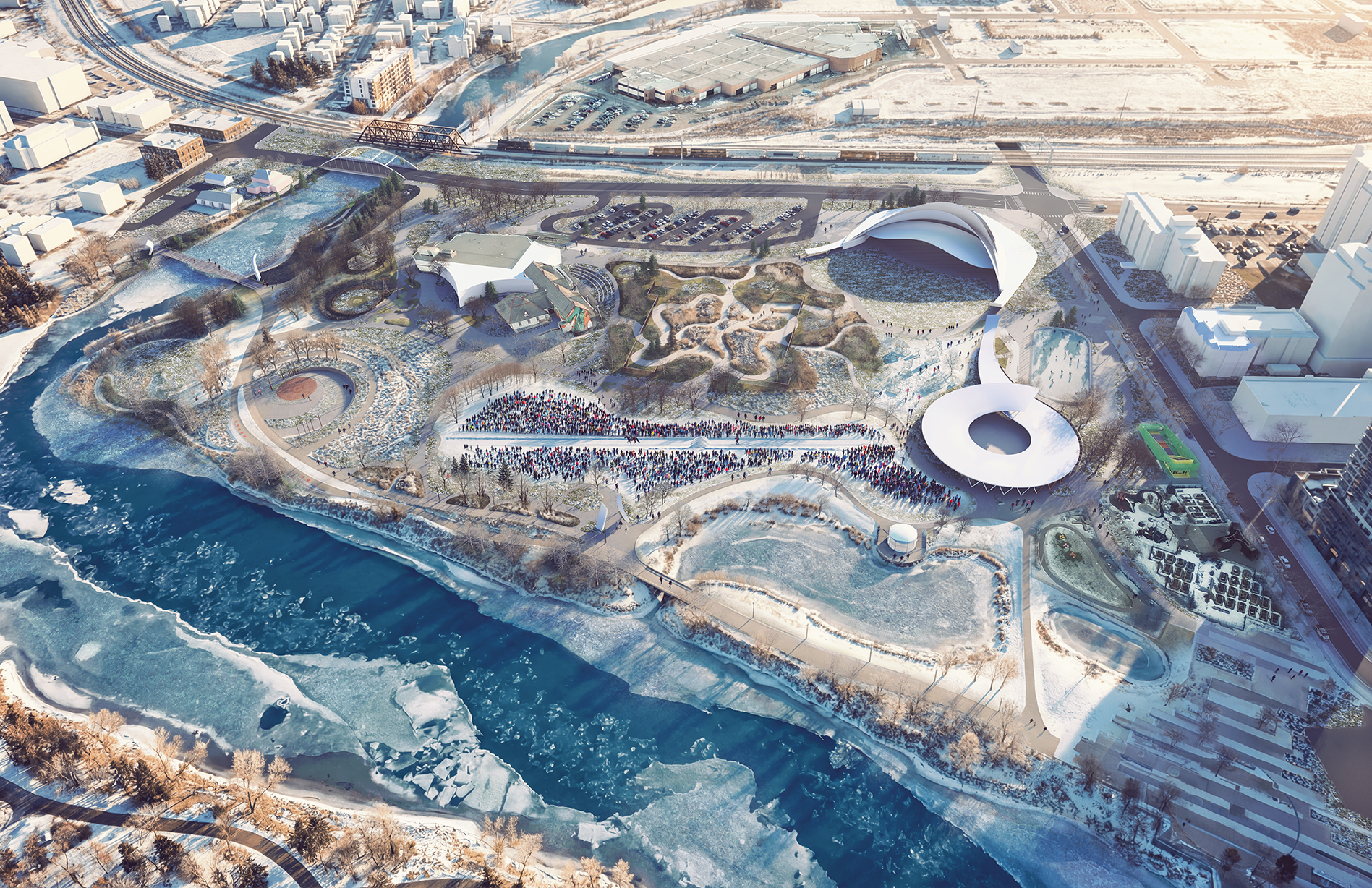
To translate these ideas onto the land, the spatial strategy establishes a structural diagonal gradient that transitions from the high-density urban interface toward the riparian “living edge” of the rivers. This structural axis blends cultural and ecological narratives, accommodating a fluid spectrum of programming structured around themes such as learning, resting, playing, recreating, and gathering. Rather than segregating these spaces, the framework weaves them together seamlessly to address the community’s primary needs, while improving connectivity to the adjacent neighbourhood and the regional pathways.
Large-scale event infrastructure—including a permanent covered stage and an expansive lawn—is clustered near the southwest urban edges to maximize capacity and mitigate noise, balancing the site’s role as an event space that connects to the nearby Culture + Entertainment District.
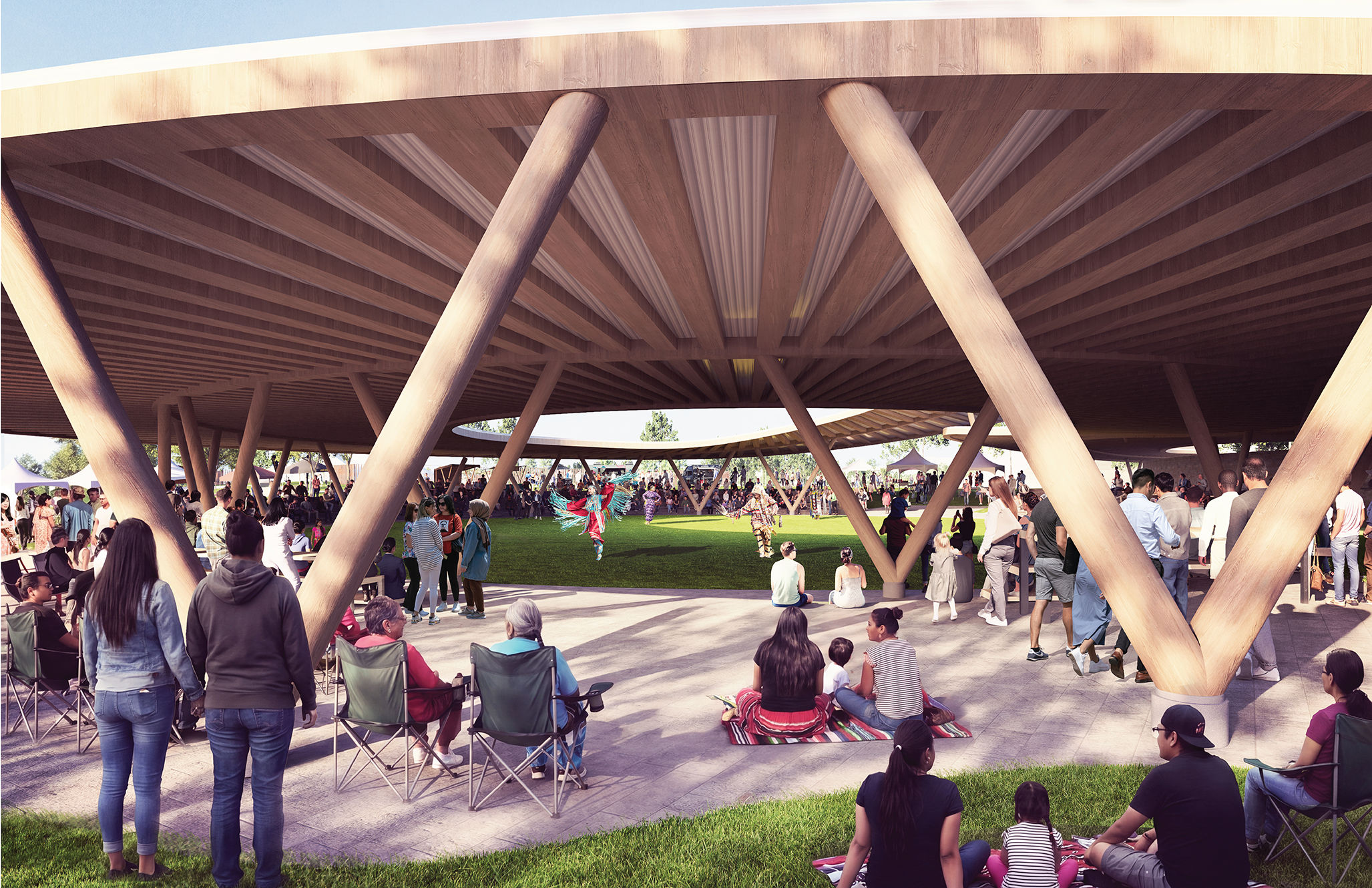
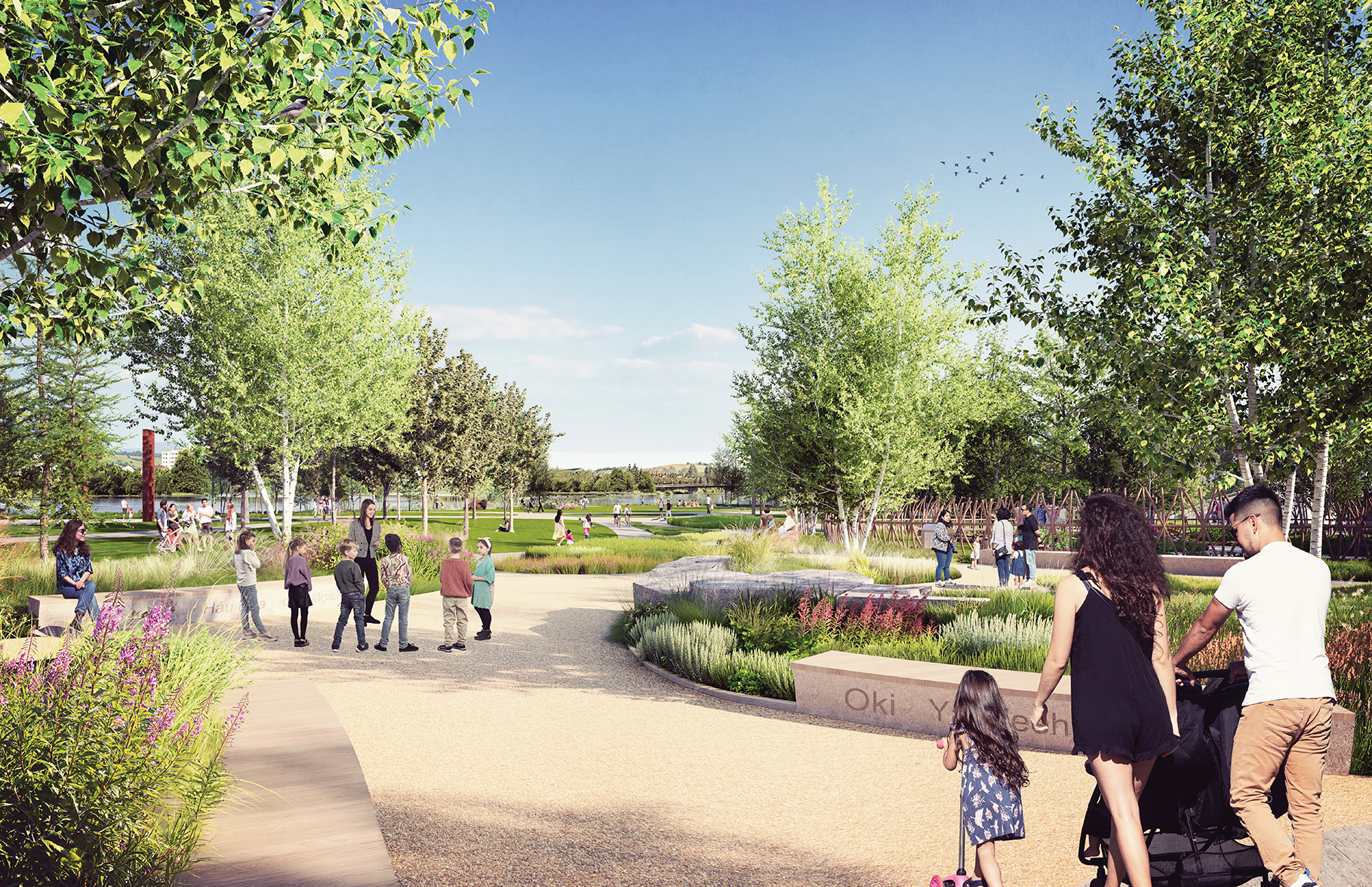
The Pow Wow Arbour and adjacent open parkland allow for Indigenous-led cultural programming and for additional seasonal events that currently make The Confluence a year-round destination. The site of the historic Fort Calgary is layered with a garden, opening it with organic, fluid pathways and diverse programming which invites people to play, learn and reflect.
Open spaces around the existing buildings open up to become more inviting, provide additional event and programming flexibility, and to reorient people back to the physical confluence of the rivers, the spiritual anchor for the place we know today as Calgary.